
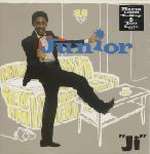
Junior - Ji - Mercury - Disco
 |
Out of Stock |
Track ListingA1 Mama Used To SayA2 Love Dies A3 Too Late A4 Is This Love B1 Let Me Know B2 Down Down B3 I Can't Help It B4 Darling You (Don't You Know) Media Condition » Near Mint (NM or M-) Sleeve Condition » Very Good Plus (VG+) |
|
| Artist | Junior | ||
| Title | Ji | ||
| Label | Mercury | ||
| Catalogue | MERS 3 | ||
| Format | Vinyl Album | ||
| Released | 1982 | ||
| Genre | Disco |
Other Titles by Junior
• Too Late • Communication Breakdown • Do You Really (Want My Love) • Do You Really (Want My Love) • Ji • Stand Strong • Too Late • Too Late • Too Late • Yes (If You Want Me) • Yes... (If You Want Me) • Mama Used To Say • Mama Used To Say • Mama Used To Say • Mama Used To Say •
Information on the Disco Genre
The disco sound, style and ethos has its roots in the late 1960s. New York City blacks, gays, heterosexuals, women and Hispanics adopted several traits from the hippies and psychedelia. They included overwhelming sound, free form dancing, "trippy" lighting, colorful costumes, and hallucinogens. Psychedelic soul groups like the Chambers Brothers and especially Sly and The Family Stone influenced proto-disco acts such as Isaac Hayes, Willie Hutch and the Philadelphia Sound discussed in the next paragraph. In addition the positivity, lack of irony and earnestness of the hippies informed proto-disco music like M.F.S.B.'s "Love Is the Message.Philly and New York soul were evolutions of the Motown sound. The Philly Sound is typified by lavish percussion, which became a prominent part of mid-1970s disco songs. Early songs with disco elements include "Only the Strong Survive" (Jerry Butler, 1968), "Message to Love" (The Jimi Hendrix Experience, 1969), "Soul Makossa" (Manu Dibango, 1972) and "The Love I Lost" (Harold Melvin & The Blue Notes, 1973).
The early disco sound was largely an urban American phenomenon with producers and labels such as SalSoul Records (Ken, Joe and Stanley Cayre), Westend Records (Mel Cheren), Casablanca (Neil Bogart), and Prelude (Marvin Schlachter) to name a few. They inspired and influenced such prolific European dance-track producers as Giorgio Moroder and Jean-Marc Cerrone. Moroder was the Italian producer, keyboardist, and composer who produced many songs of the singer Donna Summer. These included the 1975 hit "Love to Love You Baby", a 17-minute-long song with "shimmering sound and sensual attitude". Allmusic.com calls Moroder "one of the principal architects of the disco sound".
The disco sound was also shaped by Tom Moulton who wanted to extend the enjoyment of the music — thus single-handedly creating the "Remix" which has influenced many other latter genres such as techno, and pop. DJs and remixers would often remix (i.e., re-edit) existing songs using reel-to-reel tape machines. Their remixed versions would add in percussion breaks, new sections, and new sounds. Influential DJs and remixers who helped to establish what became known as the "disco sound" included David Mancuso, Tom Moulton, Nicky Siano, Shep Pettibone, the legendary and much-sought-after Larry Levan, Walter Gibbons, and later, New York–born Chicago "Godfather of House" Frankie Knuckles.
Disco was also shaped by nightclub DJs such as Francis Grasso, who used multiple record players to seamlessly mix tracks from genres such as soul, funk and pop music at discothèques, and was the forerunner to later styles such as house. Women also played important roles at the turntable. Karen Cook, the first female disco DJ in the United States, spun the vinyl hits from 1974 – 1977 at 'Elan, Houston, TX, and also programmed music for clubs throughout the US that were owned by McFaddin Ventures.
Data from the Discogs music database. Submit a Release.
