
Various - Exclusive Promotional Sampler Of Three Of The Best Underground Dance Albums Of 98 - Wax Magazine - House
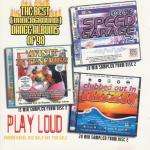 |
Price | £6.00 |
Track Listing1 JS16 Stompin System2 Quench Get With It 3 Ruff Da Menace Kick The Party 4 Invisible Man, The (3) Give A Little Love 5 Mr. Pink Sugar 6 Bump 'N' Groove Together Again 7 Suburban Signs Coolthermenta 8 Sound Boy 42 Gun Bad Boy 9 Ruff Da Menace Do I Feel Lucky 10 Wesley 2 Play All To My Self 11 Urban Funk UltraFunkula 12 Trapped Again 13 Dance Federation, The New Generation 14 Space Mac Space Mac 15 Quench Get With It 16 D'Menace House It Up 17 Mark Ryder Micropolis 18 James & Ryder Its Not Over 19 Sub System Luxury 20 Tenerife Thunder 21 Linx Linx Media Condition » Near Mint (NM or M-) Sleeve Condition » Very Good Plus (VG+) |
| Artist | Various | ||
| Title | Exclusive Promotional Sampler Of Three Of The Best Underground Dance Albums Of 98 | ||
| Label | Wax Magazine | ||
| Catalogue | WAX-2 | ||
| Format | CD Album | ||
| Released | 1998 | ||
| Genre | House |
Other Titles by Various
• True Faith The First Phase • Lazy DJs • Fierce Dance Cuts No. 1 • Serious Beats 1 • Vox Populi: First Choice Sampler 1993 Volume 1 • Betta Breaks & Beats Volume 1 • March 88 Previews • Regrooves Volume Two • Soul Daze • The Guitar Dance EP • There's A Movement Underground • Points In Time 007 • 20 Flash Back Greats Of The Sixties • A Perfecto Summer • Action Trax 2 •
Some Other Artists in the House Genre• Unknown Artist • Dina Carroll • Black Box • M People • Spacedust • Z Factor • Phats & Small • Yazz • Rhythm Masters • Tyrrel Corporation • Various Artists • Inner City • Mirage • K-Klass • Benefit • Pizzaman • Rozalla • Basement Jaxx • Strike • Karen Ramirez • Definition Of Sound • Full Intention • Daniel Bedingfield • Pauline Henry • X-Press 2 • Mary J. Blige • Staxx • Rhianna • Venus Hum • Alexia • Bobby Brown • Happy Clappers • Juliet Roberts • Eve Gallagher • Wamdue Project • Milk & Sugar • Ultra Naté • That Kid Chris • Ernest Saint Laurent • Joe Roberts • |
Some Other Artists on the Wax Magazine Label• Steve Kerr • John '00' Fleming • The Shy Brother • Mauro Picotto • No Artist • Lee Stacy • Dimitri Nakov & James Monro • Oliver Klein • |
Information on the House Genre
House is a style of electronic dance music that originated in Chicago, Illinois, USA in the early 1980s. It was initially popularized in mid-1980s discothèques catering to the African-American, Latino American, and gay communities; first in Chicago, then in Detroit, New York City, New Jersey, and Miami. It eventually reached Europe before becoming infused in mainstream pop and dance music worldwide.House is strongly influenced by elements of soul- and funk-infused varieties of disco. House generally mimics disco's percussion, especially the use of a prominent bass drum on every beat, but may feature a prominent synthesizer bassline, electronic drums, electronic effects, funk and pop samples, and reverb- or delay-enhanced vocals.
House is a descendant of disco, which blended soul, R&B, funk, with celebratory messages about dancing, love, and sexuality, all underpinned with repetitive arrangements and a steady bass drum beat. Some disco songs incorporated sounds produced with synthesizers and drum machines, and some compositions were entirely electronic; examples include Giorgio Moroder late 1970s productions such as Donna Summer's hit single "I Feel Love" from 1977, and several early 1980s disco-pop productions by the Hi-NRG group Lime.
House was also influenced by mixing and editing techniques earlier explored by disco DJs, producers, and audio engineers like Walter Gibbons, Tom Moulton, Jim Burgess, Larry Levan, Ron Hardy, M & M and others who produced longer, more repetitive and percussive arrangements of existing disco recordings. Early house producers like Frankie Knuckles created similar compositions from scratch, using samplers, synthesizers, sequencers, and drum machines.
The hypnotic electronic dance song "On and On", produced in 1984 by Chicago DJ Jesse Saunders and co-written by Vince Lawrence, had elements that became staples of the early house sound, such as the 303 bass synthesizer and minimal vocals. It is sometimes cited as the 'first house record', although other examples from the same time period, such as J.M. Silk's "Music is the Key" (1985) have also been cited.
The term may have its origin from a Chicago nightclub called the The Warehouse which existed from 1977 to 1982. The Warehouse was patronized primarily by gay black and Latino men, who came to dance to disco music played by the club's resident DJ, Frankie Knuckles. Although Knuckles left the club in 1982 and it was renamed Music Box, the term "house", short for Warehouse, is said to have become popular among Chicagoans as being synonymous with Knuckles' musical selections as a DJ before becoming associated with his own dance music productions, even though those didn't begin until well after the closure of The Warehouse. In the Channel 4 documentary Pump Up The Volume, Knuckles remarks that the first time he heard the term "house music" was upon seeing "we play house music" on a sign in the window of a bar on Chicago's South Side. One of the people in the car with him joked, "you know, that's the kind of music you play down at the Warehouse!". South-Side Chicago DJ Leonard "Remix" Rroy, in self-published statements, claims he put such a sign in a tavern window because it was where he played music that one might find in one's home; in his case, it referred to his mother's soul & disco records, which he worked into his sets.
Chip E.'s 1985 recording "It's House" may also have helped to define this new form of electronic music. However, Chip E. himself lends credence to the Knuckles association, claiming the name came from methods of labelling records at the Importes Etc. record store, where he worked in the early 1980s: bins of music that DJ Knuckles played at the Warehouse nightclub was labelled in the store "As Heard At The Warehouse", which was shortened to simply "House". Patrons later asked for new music for the bins, which Chip E. implies was a demand the shop tried to meet by stocking newer local club hits.
Larry Heard, aka "Mr. Fingers", claims that the term "house" reflected the fact that many early DJs created music in their own homes, using synthesizers and drum machines, including the Roland TR-808, TR-909, and the TB 303 Bassline synthesizer-sequencer. These synthesizers were used to create a house subgenre called acid house.
Data from the Discogs music database. Submit a Release.
