
Faithless - The Bedroom Sessions - Mixmag - Electronica
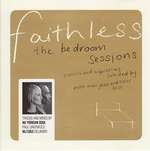 |
Price | £5.00 |
Track Listing1 Nuyorican Soul Black Gold Of The Sun (5:08)2 Dillinger Cocaine In My Brain (Groove Corporation Mix) (5:53) 3 Wayne Smith Under Me Sleng Teng (3:45) 4 A Man Called Adam Estelle (6:17) 5 Cry Sisco! Afrodizziact (Oakenfold's Raid Mix) (5:47) 6 Bent Swollen (7:15) 7 Tom McRae You Cut Her Hair (2:24) 8 Jestofunk Can We Live (6:13) 9 Fallout Morning After (Sunrise Mix) (6:29) 10 Orr-Some We Can Make It (Hardcore Remix) (4:54) 11 MJ Cole Sincere (5:36) 12 Nick Drake River Man (4:19) Media Condition » Very Good Plus (VG+) Sleeve Condition » Very Good Plus (VG+) |
| Artist | Faithless | ||
| Title | The Bedroom Sessions | ||
| Label | Mixmag | ||
| Catalogue | MM 020 | ||
| Format | CD Album | ||
| Released | 2001 | ||
| Genre | Electronica |
Other Titles by Faithless
• Muhammad Ali • One Step Too Far • Take The Long Way Home • Muhammad Ali • One Step Too Far • Reverence • Take The Long Way Home • Bring My Family Back • Bring My Family Back • Forever Faithless (The Greatest Hits) • God Is A DJ • God Is A DJ • If Lovin' You Is Wrong • Insomnia • Insomnia •
Information on the Electronica Genre
Electronica was made possible by advancements in music technology, especially electronic musical instruments, synthesizers, music sequencers, drum machines, and digital audio workstations. Early forms of electronic music required large amounts of complex equipment and multiple operators for live performances, and multiple engineers to record the music at high quality. As the technology developed, it became possible for individuals or smaller groups to produce electronic songs and recordings in smaller studios, even in project studios. At the same time, computers facilitated the use of music "samples" and "loops" as construction kits for sonic compositions. This led to a period of creative experimentation and the development of new forms, some of which became known as electronica.In the mid-1990s, electronica began to be used by MTV and major record labels to describe mainstream electronic dance music made by such artists as Orbital (who had previously been described as ambient) and The Prodigy.[citation needed] It is currently used to describe a wide variety of musical acts and styles, linked by a penchant for overtly electronic production; a range which includes more popular acts such as Björk, Goldfrapp and IDM artists such as Autechre, and Aphex Twin to dub-oriented downtempo, downbeat, and trip-hop. Madonna and Björk are said to be responsible for electronica's thrust into mainstream culture, with their albums Ray of Light (Madonna), Post and Homogenic (Björk). Electronica artists that would later become commercially successful began to record in this early 1990s period, before the term had come into common usage, including for example Fatboy Slim, Fœtus, Daft Punk, The Chemical Brothers, The Crystal Method, Moby, Underworld and Faithless. A focus on "songs", a fusion of styles and a combination of traditional and electronic instruments often sets apart musicians working in electronic-styles over more straight-ahead styles of house, techno and trance. Electronica composers often create alternate versions of their compositions, known as "remixes"; this practice also occurs in related musical forms such as ambient, jungle, and electronic dance music. Wide ranges of influences, both sonic and compositional, are combined in electronica recordings.
The more abstract Autechre and Aphex Twin around this time were releasing early records in the "intelligent techno" or so-called intelligent dance music (IDM) style, while other Bristol-based musicians such as Tricky, Leftfield, Massive Attack and Portishead were experimenting with the fusion of electronic textures with hip-hop, R&B rhythms to form what became known as trip-hop. Later extensions to the trip hop aesthetic around 1997 came from the highly influential Vienna-based duo of Kruder & Dorfmeister, whose blunted, dubbed-out, slowed beats became the blueprint for the new style of downtempo. Roni Size, Goldie and Omni Trio commanded attention in the UK as exemplars of the drum and bass genre.
It could be noted that older bands such as New Order and Depeche Mode had built on the new wave music of the 1980s and added more dance and electronic instrumentation and alternative rock influences to become early pioneers of "electronica" music. These two groups are very commonly cited as being hugely influential to the first generations of underground and later, alternative electronica artists.
Data from the Discogs music database. Submit a Release.
