
Jive Bunny And The Mastermixers - Swing The Mood - Music Factory - Rock
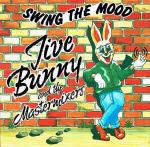 |
Price | £4.00 |
Track ListingA Swing The Mood (6:00)B1 Swing The Mood (Radio Mix) (4:05) B2 Glenn Miller Medley (The J.B. Edit) (3:55) Media Condition » Near Mint (NM or M-) Sleeve Condition » Very Good Plus (VG+) |
| Artist | Jive Bunny And The Mastermixers | ||
| Title | Swing The Mood | ||
| Label | Music Factory | ||
| Catalogue | MFDT 001 | ||
| Format | Vinyl 12 Inch | ||
| Released | 1989 | ||
| Genre | Rock |
Other Titles by Jive Bunny And The Mastermixers
• Hot Summer Salsa • Let's Party - (some ring wear on sleeve) • Let's Party / Auld Lang Syne • Rock 'n' Roll Dance Party • Swing The Mood • Swing The Mood • Swing The Mood • Swing The Mood • That Sounds Good To Me • That's What I Like • Jive Bunny - The Album • Jive Bunny - The Album • Let's Party / Auld Lang Syne • Swing The Mood • Swing The Mood •
Some Other Artists in the Rock Genre• Rod Stewart • Status Quo • Elton John • The Moody Blues • Tina Turner • Joan Armatrading • Bread • Dr. Hook • The Beach Boys • Simple Minds • Elvis Presley • Mike Oldfield • T'Pau • 10cc • Daryl Hall & John Oates • Carly Simon • Rick Wakeman • Art Garfunkel • Big Country • Shakin' Stevens • Meat Loaf • Robert Palmer • Buddy Holly • Neil Diamond • Judie Tzuke • Chris Rea • Don Mclean • Jennifer Rush • The Shadows • Billy Joel • Sky • Darts • Roxy Music • Doctor & The Medics • Showaddywaddy • Huey Lewis & The News • Slade • Donovan • Barclay James Harvest • Electric Light Orchestra • |
Some Other Artists on the Music Factory Label• Megabass • Two Little Boys • Various Artists • Various DJ Toolkit Part 21 • Music Factory • Janet Kay • Various - bonus disc missing • 'La Vie En Rose' & Miquel Brown • |
Information on the Rock Genre
Rock music is a genre of popular music that entered the mainstream in the 1950s. It has its roots in 1940s and 1950s rock and roll, rhythm and blues, country music and also drew on folk music, jazz and classical music. The sound of rock often revolves around the electric guitar, a back beat laid down by a rhythm section of electric bass guitar, drums, and keyboard instruments such as Hammond organ, piano, or, since the 1970s, synthesizers. Along with the guitar or keyboards, saxophone and blues-style harmonica are sometimes used as soloing instruments. In its "purest form", it "has three chords, a strong, insistent back beat, and a catchy melody."In the late 1960s and early 1970s, rock music developed different subgenres. When it was blended with folk music it created folk rock, with blues to create blues-rock and with jazz, to create jazz-rock fusion. In the 1970s, rock incorporated influences from soul, funk, and Latin music. Also in the 1970s, rock developed a number of subgenres, such as soft rock, glam rock, heavy metal, hard rock, progressive rock, and punk rock. Rock subgenres that emerged in the 1980s included new wave, hardcore punk and alternative rock. In the 1990s, rock subgenres included grunge, Britpop, indie rock, and nu metal.
Some of the many rock genres
# 1 Background (1950s-early 1960s)
* 1.1 Rock and roll
* 1.2 The "in-between years"
* 1.3 Surf music
# 2 Golden Age (1963-1974)
* 2.1 The British Invasion
* 2.2 Garage rock
* 2.3 Pop rock
* 2.4 Blues-rock
* 2.5 Folk rock
* 2.6 Psychedelic rock
* 2.7 Roots rock
* 2.8 Progressive rock
* 2.9 Glam rock
* 2.10 Soft rock, hard rock and early heavy metal
* 2.11 Christian rock
# 3 Punk and its aftermath (mid-1970s to the 1980s)
* 3.1 Punk rock
* 3.2 New wave
* 3.3 Post-punk
* 3.4 New waves and genres in heavy metal
* 3.5 Heartland rock
* 3.6 The emergence of alternative rock
# 4 Alternative goes mainstream (the 1990s)
* 4.1 Grunge
* 4.2 Britpop
* 4.3 Post-grunge
* 4.4 Pop punk
* 4.5 Indie rock
* 4.6 Alternative metal, rap rock and nu metal
* 4.7 Post-Britpop
# 5 The new millenium (the 2000s)
* 5.1 Emo
* 5.2 Garage rock/Post-punk revival
* 5.3 Metalcore and contemporary heavy metal
* 5.4 Digital electronic rock
Data from the Discogs music database. Submit a Release.
