
Boxcar - People Get High - Pulse-8 Records - Progressive
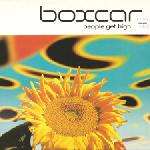 |
Out of Stock |
Track ListingA1 People Get High (Ca$ino Mix)A2 People Get High (Boxcar Original Mix) B1 People Get High (Forthright Hard Dub) B2 People Get High (Boxcar Moonlight Dub) Media Condition » Near Mint (NM or M-) Sleeve Condition » Near Mint (NM or M-) |
|
| Artist | Boxcar | ||
| Title | People Get High | ||
| Label | Pulse-8 Records | ||
| Catalogue | 12 LOSE 105 | ||
| Format | Vinyl 12 Inch | ||
| Released | 1996 | ||
| Genre | Progressive |
Other Titles by Boxcar
• Freemason (You Broke The Promise) • Freemason (You Broke The Promise) • Insect • People Get High • People Get High • People Get High • Universal Hymn •
Information on the Progressive Genre
Progressive house is a style of house music that is noted for musical progression within melodies and basslines. The term was coined by Mixmag editor Dom Phillips. It has similar elements to both electro-house and trance. It has its origins in Great Britain in the early 1990s, with the output of Guerilla Records and Leftfield's first singles (particularly "Song of Life"). The music itself was produced with the 4-to-4 beat of house music and deeper dub-influenced basslines, with greater emphasis on emotion before structural considerations. Often, it featured elements from many different genres mixed together. Song of Life, for instance, has a trip-hop like down-pitched breakbeat and a high-energy Roland TB-303 riff at various stages.In 1992, the dance club Renaissance opened in Mansfield where DJs Sasha and John Digweed were instrumental in popularizing its early sound. Other notable Progressive House DJs and producers include: Nathan Fake, James Holden, Dave Seaman, Nick Warren, Jason Jollins, Hernan Cattaneo, Danny Howells, Anthony Pappa, and Deadmau5. Notable active progressive house labels include Baroque Records, Bedrock Records, Renaissance, Audiotherapy, Global Underground and Source of Gravity.
Progressive trance is a popular sub-genre in trance music and contains elements of house, techno, and ambient music. By the late 1990s, trance became more focused on the anthemic qualities and melodies, moving away from arpeggiated analog synth patterns. Acoustic elements and spacey pads became popular with compositions leaned towards incremental changes à la progressive structures. Progressive trance contains distinctive sounds in many tracks, such as unusual basslines or original synthesized sounds, which generally makes it more "catchy". Phrases are usually a power of two number of bars in most typical progressive trance tracks. Phrases usually begin with the introduction of a new or different melody or rhythm.
Compared to trance, the progressive wing is usually deeper and more abstract, featuring a lower average bpm (around 125-135 instead of 130-160) and a recurrent melodic structure. This structure is intuitively described as consisting of three major structural elements: build-up; breakdown ; climax. These three structural elements are expressed either temporally or in their intensity, if not both. A 'build-up' sequence can sometimes last up to 3 or even 4 minutes. Subtle incremental/decremental acoustic variations (i.e., gradual addition/subtraction of instruments) anticipate the transition to each subsequent structural element of the track. The initial build-up and the final break-down are generally very similar, adding a feel of symmetry to the general structure of the melody. Furthermore, a progressive trance track is usually longer than a regular trance track, ranging in length from 5-6 to even 12–13 minutes.
Although there is a general and increasing tendency to associate progressive trance with progressive house (or vice-versa), virtually rendering these two sub-genres identical, there are however distinctive characteristics apart from the strong similitudes between them: progressive trance inherits from its parent genre (trance) a wider melodic flexibility, while progressive house is usually darker and more minimal.
Some of the most representative names that currently work in this sub-genre are Laurent Veronnez, Sasha, Mike Dierickx, Matt Darey, Vibrasphere, Armin van Buuren, Brian Transeau (aka BT), Christopher Lawrence and more recently, Markus Schulz.
Data from the Discogs music database. Submit a Release.
